Reclaimed Farm Baling Twine From Our Hayfields to Your Hands
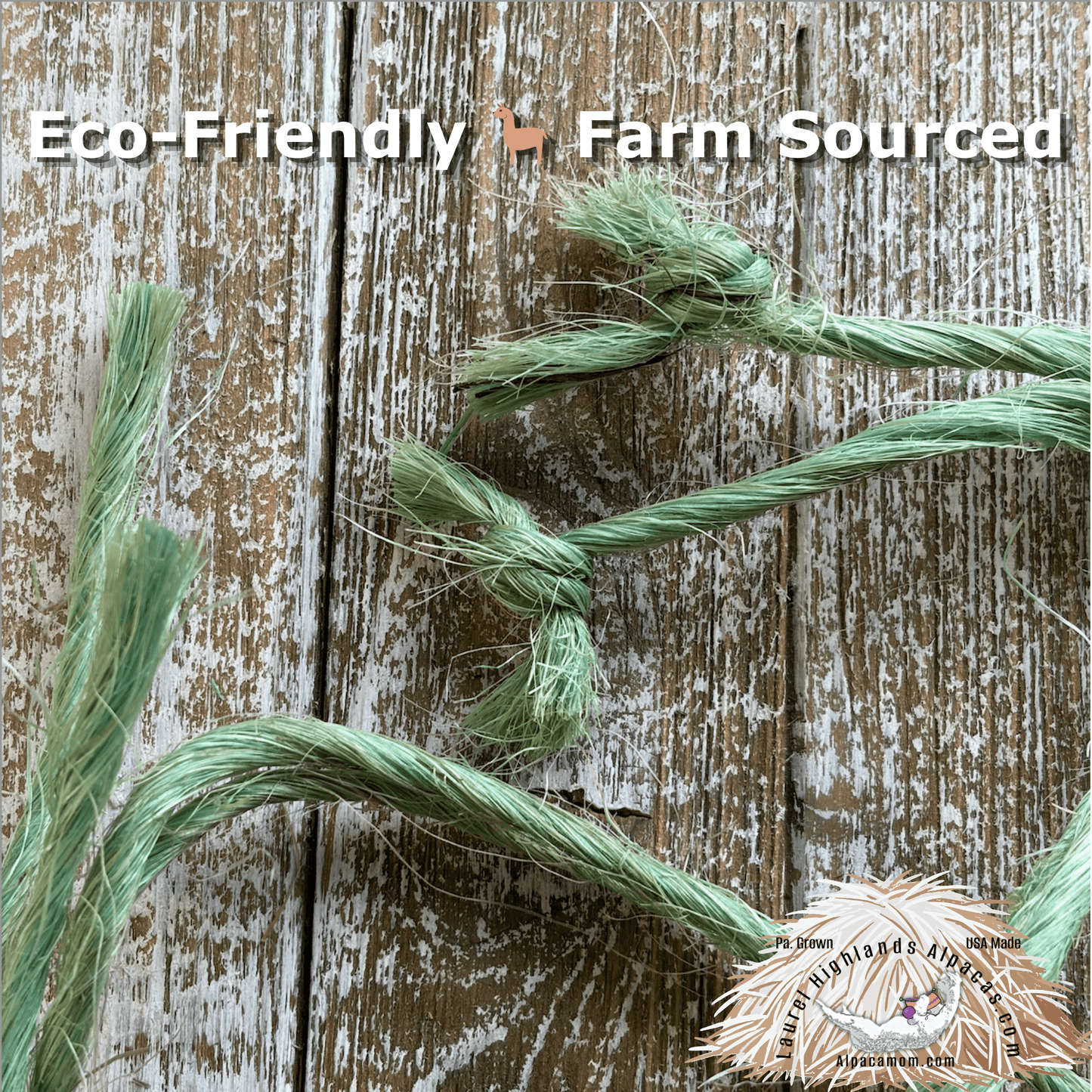
On our farm at Laurel Highlands Alpacas, even the smallest things have a purpose. This baling twine once secured the hay that feeds our animals—and now it’s ready for a second life with you.
Strong, practical, and full of quiet character, each piece carries a bit of the farm with it.
Details: • 2 reclaimed twine lengths per bundle • Approximately 70" each • Available in green, natural, or blue
Each bundle is unique and may show light signs of use—adding to its authenticity and rustic charm.
Perfect for: Garden ties • Herb drying • Gift wrapping • Craft projects • Organizing • Rustic décor
♻️ Thoughtfully Reused A simple, sustainable way to bring a bit of farm life into your everyday.
Pair it with: Our farm yarn, roving, or fiber bundles for beautifully wrapped gifts or cohesive craft projects.
A small farm note: We offer these in limited quantities—just what we have on hand—so availability may vary.
Before we wash our fiber, we blow out the dust! How much dust? This video shows how the dust and second cuts we miss during skirting come right out. Alpacas love to roll in a dust bath. Blowing out the fiber after skirting reduces the amount of water we use. It's that much less dust in our products and saves wear and tear on our equipment.
What is a Hackle? According to the Merriam-Webster Dictionary, a hackle is “a comb or board with long metal teeth for dressing flax, hemp, or jute” and in my case,...
What is a Hackle? According to the Merriam-Webster Dictionary, a hackle is “a comb or board with long metal teeth for dressing flax, hemp, or jute” and in my case,...
1 / of2
How to care for your alpaca fiber products
Alpaca Fiber Care Tips
Alpaca fiber is naturally antimicrobial, so it doesn't need to be washed often.
When it does need a good clean, wash on a gentle cool cycle (preferable a wool cycle if your machine has one) with a mild detergent, or hand wash.
For best results, turn your garment inside out before washing.
The best way to dry your alpaca garment is just to lay it out on a flat surface to air-dry.
Choosing a selection results in a full page refresh.